What Is a Boiler Pump and How Does It Work?
A Boiler Pump moves heated water through a boiler and the pipes, radiators, or underfloor loops connected to it. Without steady circulation, heat may reach rooms unevenly, and some parts of the system may become warmer than others. The pump’s job sounds simple. Its operating conditions are not always simple.
In many hydronic heating systems, an electric circulator uses an impeller to push water around a closed circuit. The boiler heats the water, the pump moves it onward, and cooler water returns for reheating. Small details matter. Pipe layout, system pressure, air, and the pump’s speed can all affect circulation. A pump that runs continuously is not automatically working well.
This guide explains common pump types, where they are installed, and how their basic components support water flow. It also describes signs of trouble, such as cold radiators, unusual humming, or visible leakage. These symptoms can point to pump problems, but they may also have other causes. A sound alone is not a diagnosis. The system’s age and design matter, too.
Understanding how a Boiler Pump works can help homeowners describe a problem clearly and ask better questions during service. It does not replace a qualified technician’s inspection, especially when electrical connections or hot, pressurized water are involved. A useful first step is often modest: note what the heating system is doing, when the issue began, and which areas feel cold. Even then, the answer may not be the pump.
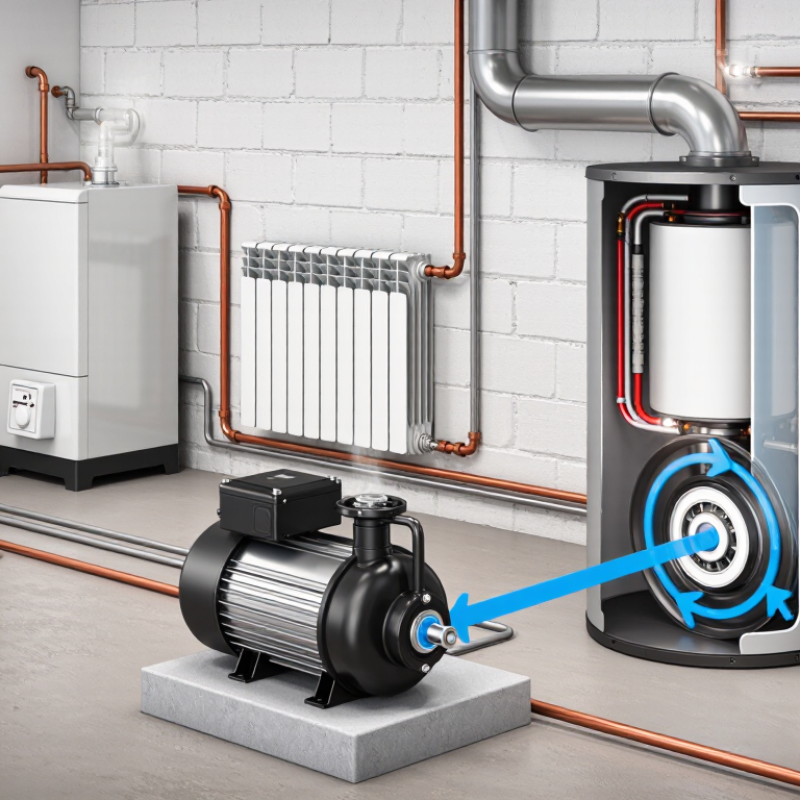
What a Boiler Pump Is and Its Role in a Heating System
A boiler pump, often called a circulator, moves heated water through pipes, radiators, or underfloor heating loops. The boiler supplies the heat; the pump supplies movement. It pushes warm water toward rooms and returns cooler water to be reheated. Without steady circulation, some radiators may stay cool while others overheat. That uneven pattern can point to air in the system, a closed valve, or a pump problem, though it is not a diagnosis on its own.
Pump choice and adjustment matter. A pump that is too small may not deliver enough water through the circuit; one that runs harder than needed can waste electricity and create noise. The U.S. Department of Energy’s Improving Pumping System Performance sourcebook notes that pumping systems account for nearly 20% of global electricity demand. That figure covers pumping systems broadly, not household boiler pumps, but it shows why efficient circulation deserves attention. A pump can be running and still be poorly matched to the system. Small detail, real impact.
Tips: Check that radiators heat evenly and listen for persistent humming or rattling. Do not open a hot, pressurized system. If circulation remains uneven, have a qualified heating professional check pump settings, valves, and trapped air.
How Boiler Pump Flow Carries Heat
A boiler pump circulates water through the heating system, moving heat from the boiler to radiators or other heat emitters. This chart illustrates the approximate heat carried by water at different flow rates, assuming a 20°F (about 11°C) temperature drop. The estimate uses the common hydronic-water relationship: heat transfer ≈ 500 × flow rate (gallons per minute) × temperature difference (°F). Actual system performance depends on its design and operating conditions.
Key Components That Move Water Through a Boiler
A boiler pump moves water through the heating system, but several parts work together to make that movement steady. The electric motor provides rotation. Inside the pump, an impeller spins and pushes water toward the outlet. Its curved blades guide the flow. A close-fitting pump casing, often called a volute, collects the water and directs it into the pipes. Small clearances matter. Wear can reduce performance.
The shaft connects the motor to the impeller, while bearings help it turn smoothly. Mechanical seals around the shaft limit leaks. Many systems also use controls that start or stop the pump as heating demand changes. Valves nearby help regulate or isolate flow, though their arrangement varies by system. A pump does not create heat; it circulates heated water between the boiler and radiators or other emitters. One detail is easy to overlook: air or debris in the circuit can affect circulation, even when the motor still runs.
Tips: Listen for unusual rattling, humming, or repeated cycling, and look for visible leaks around joints. Check the system manual before touching valves or controls. If radiators heat unevenly or the pump becomes unusually hot, have a qualified heating professional inspect it. A quiet pump is reassuring, not proof that every component is working perfectly.
What Is a Boiler Pump and How Does It Work? - Key Components That Move Water Through a Boiler | Component | What It Does | How It Moves or Controls Water | Useful Detail |
| Pump motor | Supplies the mechanical power that turns the pump. | Rotates the shaft and impeller, enabling the pump to create a pressure difference. | Many residential hydronic systems use an electric circulator pump. The motor itself does not heat the water. |
| Impeller | A rotating wheel with blades inside the pump housing. | Transfers energy to the water and drives it outward from the impeller’s center toward the outlet. | Most boiler circulators use a centrifugal-pump design. The impeller creates flow by adding energy to the water. |
| Pump housing (volute) | Encloses the impeller and provides the water passages around it. | Collects water leaving the impeller and guides it toward the discharge connection. | The housing helps convert some of the water’s velocity into pressure. |
| Suction connection | Connects the pump inlet to the upstream pipework. | Allows water to enter the pump as the rotating impeller lowers pressure near its center. | Air, blockage, or inadequate inlet pressure can interfere with pump operation and water flow. |
| Discharge connection | Connects the pump outlet to the boiler circuit. | Carries pressurized water away from the pump toward the boiler or heating loop. | In a closed hydronic system, the pump circulates water around the circuit; it does not continuously supply new water. |
| Shaft and bearings | Support and transfer rotation from the motor to the impeller. | Keep the rotating assembly aligned so the impeller can turn smoothly. | Wear or damage can cause noise, vibration, or reduced pump performance. |
| Mechanical seal or rotor can | Separates the wet pump area from parts that should remain dry, depending on pump design. | Helps prevent water from leaking out around the rotating assembly. | Some circulator designs use a sealed rotor arrangement rather than a conventional shaft seal. |
| Check valve | Restricts reverse flow when the pump is off, where one is fitted. | Opens for flow in the intended direction and closes if water tries to flow backward. | Not every boiler circuit uses a separate check valve; some pumps or system layouts provide flow control in other ways. |
| Controls and sensors | Determine when the pump should run. | A boiler control, thermostat, or system controller may switch the pump on when circulation is needed. | Control arrangements vary by boiler and heating-system design. |
How a Boiler Pump Circulates Water Step by Step
A boiler pump moves heated water through a hydronic heating loop; it does not create heat. When the thermostat calls for warmth, the boiler heats the water and the pump’s motor turns an impeller. The impeller pushes water into the supply pipe, while cooler water returns to the boiler. This pressure difference keeps water moving through radiators, baseboards, or underfloor tubing. Picture a warm pipe leaving the boiler and a cooler one returning. Small details matter.
Flow depends on pump speed, pipe resistance, valves, and air trapped in the circuit. When a zone valve opens, water follows that branch; when it closes, flow shifts elsewhere. The U.S. Department of Energy’s Improving Pumping System Performance sourcebook reports that pumping systems use nearly 20% of global electricity demand. That figure covers pumping systems broadly, not boiler pumps alone, but it shows why sizing and control matter. Excess flow can waste electricity and cause noise; too little may leave distant rooms cool. Not every cold room points to the pump. Air, blocked strainers, or balancing problems can look similar, and diagnosis is not always obvious. A qualified technician can check temperature differences, pressure, and pump operation before adjusting settings.
Common Boiler Pump Types and Their Applications
A boiler pump moves heated water through pipes, radiators, or underfloor loops. The boiler supplies heat, while the pump creates circulation and maintains useful flow. Most pumps use an electric motor and an impeller. As the impeller spins, it pushes water through the system and returns cooler water to the boiler.
The common circulator pump suits residential heating zones and small commercial systems. It is compact, reliable, and often installed near the boiler or mixing valve. An inline centrifugal pump handles higher flow rates in larger buildings. Its position in the pipe reduces space requirements, but correct alignment remains essential. A variable-speed pump adjusts output as heating demand changes. This can reduce electrical use and limit temperature swings in rooms. It works well with multiple zones, weather compensation, and systems with changing valve positions.
Boiler feed pumps serve steam boilers rather than ordinary hot-water circuits. They deliver treated water into the boiler against internal pressure. These pumps need careful sizing and dependable controls. Too little flow may damage the boiler, while excessive flow can waste energy. In field inspections, technicians often find air locks, blocked strainers, or incorrect pump settings. The pump may appear faulty when the real problem is poor system balancing. There is no perfect choice. Noise, pipe resistance, water temperature, maintenance access, and operating pressure all deserve attention before installation.
Signs of Pump Problems and Basic Maintenance
A boiler pump moves heated water through pipes, radiators, or underfloor loops. When circulation slows, some rooms may stay cold while others heat normally. Listen closely. A new hum, grinding sound, or repeated clicking can point to a worn bearing, trapped air, or restricted flow. The sound alone cannot confirm the cause.
Watch for leaks around the pump, unusually warm pipework, frequent boiler shutdowns, or pressure changes. A small damp patch matters. Note when the symptom occurs and whether radiators heat evenly; those details help a qualified technician diagnose the system. One clue is rarely enough, and a quiet pump is not automatically a healthy one.
Basic maintenance starts with keeping the area dry and unobstructed, checking visible fittings for seepage, and arranging inspection according to the boiler’s service schedule. Do not open a hot, pressurized system or touch electrical parts; switch-off procedures should follow the manufacturer’s instructions.
The U.S. Department of Energy’s 2014 Improving Pumping System Performance sourcebook reports that pumping systems use nearly 20% of global electricity demand, in broad industrial contexts. That figure is not a household boiler benchmark, but it shows why efficient circulation deserves attention.
A little uncertainty remains: pump noise and temperature can vary by system design.
