How to Choose the Best Nitrogen Generator in 2026?
Choosing the best Nitrogen Generator in 2026 requires more than comparing purchase prices. The right system must match your purity target, flow demand, operating pressure, and duty cycle. A laboratory may need stable 99.999% nitrogen. A food-packaging line may need lower purity but continuous delivery. These are different engineering problems.
W. Edwards Deming, a respected quality expert whose methods influence industrial gas operations, said, “Without data, you’re just another person with an opinion.” That principle matters here. Review measured flow, purity stability, compressed-air consumption, noise, maintenance intervals, and energy use. Do not trust impressive brochures alone. Ask for test conditions. Ask for lifetime operating figures.
PSA Nitrogen Generators often suit factories needing adjustable output and dependable on-site supply. Membrane units can be compact and simple, although they may offer lower purity. Cryogenic systems can support very large demand, but their complexity and capital cost deserve careful review. In 2026, smart monitoring, remote diagnostics, efficient compressors, and modular design will influence many buying decisions.
Still, no selection guide is perfect. Your real demand may change after installation. A generator sized only for today could become restrictive. An oversized unit could waste energy and money. Consider future production, backup storage, service access, and local technical support. Walk around the proposed installation area. Measure the air temperature, check ventilation, and listen for practical concerns. The best Nitrogen Generator is not always the most advanced model. It is the system that delivers verified nitrogen reliably, safely, and economically.
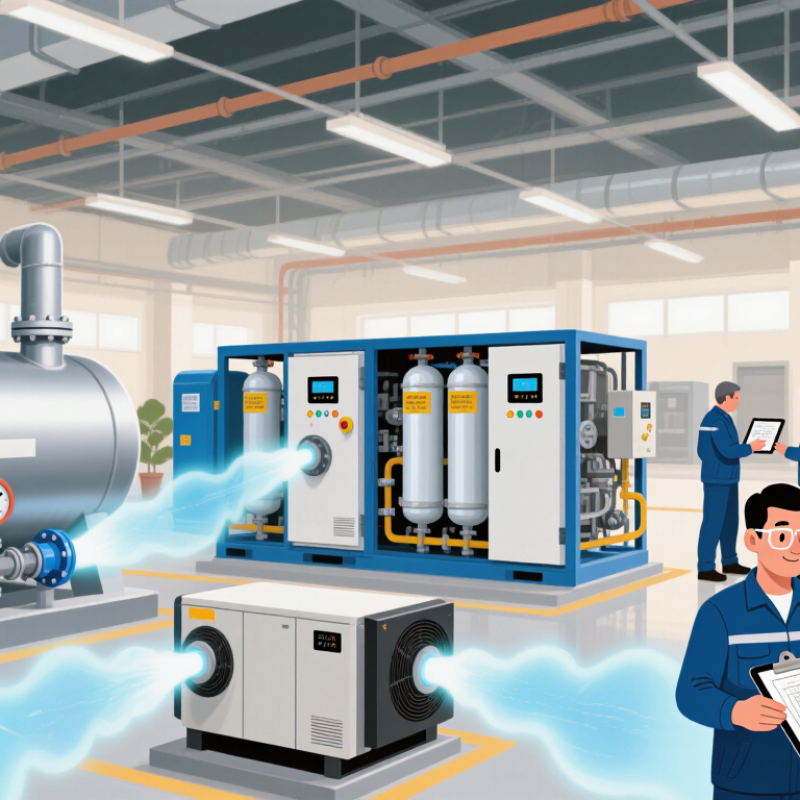
Understanding Nitrogen Generators and Their Main Technologies
How to Choose the Best Nitrogen Generator in 2026?
Understanding Nitrogen Generators and Their Main Technologies
Nitrogen generators separate nitrogen from compressed air at the point of use. This reduces dependence on delivered cylinders and liquid nitrogen tanks. The main technologies are pressure swing adsorption, membrane separation, and cryogenic distillation.
PSA systems use carbon molecular sieves. They commonly support high-purity nitrogen for food packaging, electronics, and metal processing. Membrane systems are simpler and often suit moderate purity, steady flow, and limited maintenance. Cryogenic plants produce very high purity and large volumes, but they require greater capital, space, and operating expertise. A 2024 MarketsandMarkets report forecasts continued growth in the nitrogen generation market through 2028, driven by industrial gas demand and onsite supply. The report also highlights energy efficiency as a major purchasing factor.
Tips: Measure flow during peak production, not average production. Check required purity, pressure, dew point, noise, and available floor space. Ask for measured energy consumption at your operating load. A laboratory purity figure may not match factory performance.
The U.S. Department of Energy’s industrial efficiency guidance treats compressed-air demand as a key operating-cost issue. This matters because poor compressor control can weaken an otherwise efficient generator. In practice, PSA is not always the best choice. Membranes can be more practical for lower purity. Cryogenic technology may be excessive for a small workshop. My concern is simple: buyers often compare purchase prices, then overlook compressor energy, filter replacement, and downtime. That decision deserves a second look.
Assessing Nitrogen Purity, Flow Rate, and Pressure Requirements
Choosing a nitrogen generator in 2026 starts with the gas your process actually consumes. Purity is not a decorative number. Laboratory instruments may require 99.999% nitrogen, while packaging or blanketing may work with lower purity. Confirm the oxygen limit, residual moisture, and allowable hydrocarbons in writing. A purity sensor at the outlet is valuable, but it still needs calibration and sensible sampling.
Flow rate must match real demand, not a hopeful average. List every connected device, then record its peak consumption during start-up, purging, and simultaneous operation. Add a modest reserve, often 15 to 25 percent, because production rarely behaves perfectly. I have seen systems undersized after operators measured only steady-state flow. The result was pressure drops and slow recovery. A larger unit is not automatically better; poor cycling can waste energy and shorten service intervals.
Pressure deserves equal attention. Check the required inlet pressure at the point of use, not only at the generator outlet. Long tubing, filters, valves, and elevation can reduce usable pressure. Compare the generator’s rated flow at your target pressure and purity. These figures can change significantly together. Ask for test conditions and independent performance data. A factory number may look precise, yet field temperatures and maintenance habits can alter it. Leave room for inspection, but do not overspecify without evidence. That mistake is easy to make.
Comparing Membrane, PSA, and Cryogenic Nitrogen Generation Systems
How to Choose the Best Nitrogen Generator in 2026?
Comparing Membrane, PSA, and Cryogenic Nitrogen Generation Systems
Choosing a nitrogen generator starts with process demands, not equipment size. Purity, flow, pressure, operating hours, and installation space should guide the decision. In plant assessments, I have found that real gas consumption often differs from estimates. That difference can change the preferred technology.
Membrane Systems
Membrane systems separate nitrogen through selective fiber materials. They are compact, quiet, and generally simple to operate. They work well for tire filling, blanketing, and moderate-purity applications. However, higher purity can reduce flow and increase compressed-air demand.
PSA Systems
PSA systems use adsorbent beds that alternate between adsorption and regeneration. They can produce high-purity nitrogen for food packaging, electronics, and heat treatment. Their cycling valves, air dryers, and filters require disciplined maintenance. Small failures can cause unstable purity.
Cryogenic Systems
Cryogenic systems cool air until its components separate by boiling points. They are suited to very large, continuous nitrogen demand and extremely high purity. The equipment needs substantial capital, technical supervision, and careful safety controls around cold surfaces and stored liquid. It may be excessive for a small workshop.
Compare measured demand across shifts, not only the design maximum. Energy prices, feed-air quality, backup supply, and future expansion also deserve attention. A spreadsheet can mislead. Field data is better.
Selecting the Best Nitrogen Generator for Your Application in 2026
Selecting the Best Nitrogen Generator for Your Application in 2026
The right nitrogen generator begins with your application, not its advertised output. Define required purity, flow rate, pressure, operating hours, and available space. A laboratory may need stable, ultra-high purity gas, while packaging equipment may prioritize continuous flow and low operating costs. Check the nitrogen demand during peak production, not only the daily average. A small margin matters.
Technology also affects performance. Pressure swing adsorption suits many continuous industrial applications, while membrane systems can offer simpler operation and compact installation. Feed-air quality is often underestimated. Oil, moisture, and dust can damage internal components or reduce purity. Include suitable filtration, ventilation, and drainage before commissioning the generator. In real facilities, noise and heat can become practical problems.
Tips: List your peak flow. Confirm outlet pressure. Measure room temperature. Ask for purity verification data. Review maintenance intervals and spare-part access. Request a realistic energy estimate, not a best-case figure.
An experienced engineer should compare lifecycle cost with purchase price. Examine compressor efficiency, standby behavior, alarm functions, and remote monitoring. Sensors may improve control in 2026, but they still need calibration. Do not accept a specification without testing conditions. A generator rated at one purity level may perform differently under changing flow or temperature. That detail is easy to miss. Leave room for future capacity, but avoid buying excessive equipment. Oversizing can waste energy and complicate maintenance. The best selection is sometimes less impressive on paper, yet more dependable every working day.
