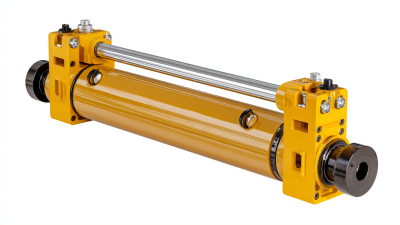
How to Find China Top Hydraulic Piston Manufacturers?

Finding China’s top Hydraulic Piston manufacturers requires more than comparing prices or browsing polished websites. The strongest suppliers prove their capability through traceable materials, stable machining, accurate sealing, and repeatable testing. A serious evaluation should examine piston-rod surface finish, dimensional tolerances, heat-treatment records, coating thickness, and pressure-test reports. Ask for production photographs. Request sample parts.

Peter Nachtwey, a respected hydraulic motion-control engineer, once said, “Hydraulics is a science, not an art.” That principle matters when selecting a Chinese manufacturer. A reliable factory should explain its design choices with measurements, not vague promises. It should also identify failure risks before production begins.

Look closely at the details. Can the supplier provide steel certificates and inspection records? Does its quality team use calibrated micrometers, roundness testers, and hydraulic test benches? Are seals selected for temperature, pressure, and fluid compatibility? These questions reveal more than a colorful catalog.

Experience still matters. A manufacturer serving construction equipment may not understand the fatigue demands of industrial presses. A supplier with excellent prototypes may struggle with consistent mass production. No shortlist is perfect. I have seen attractive quotations hide weak documentation and rushed sampling.

This guide explains how to compare China’s leading Hydraulic Piston manufacturers using practical evidence. It considers engineering depth, factory controls, customization ability, communication, delivery reliability, and after-sales support. The goal is not to find the cheapest source. It is to find a partner that can deliver dependable pistons under real operating conditions. Check everything. Then check the assumptions behind your checks.
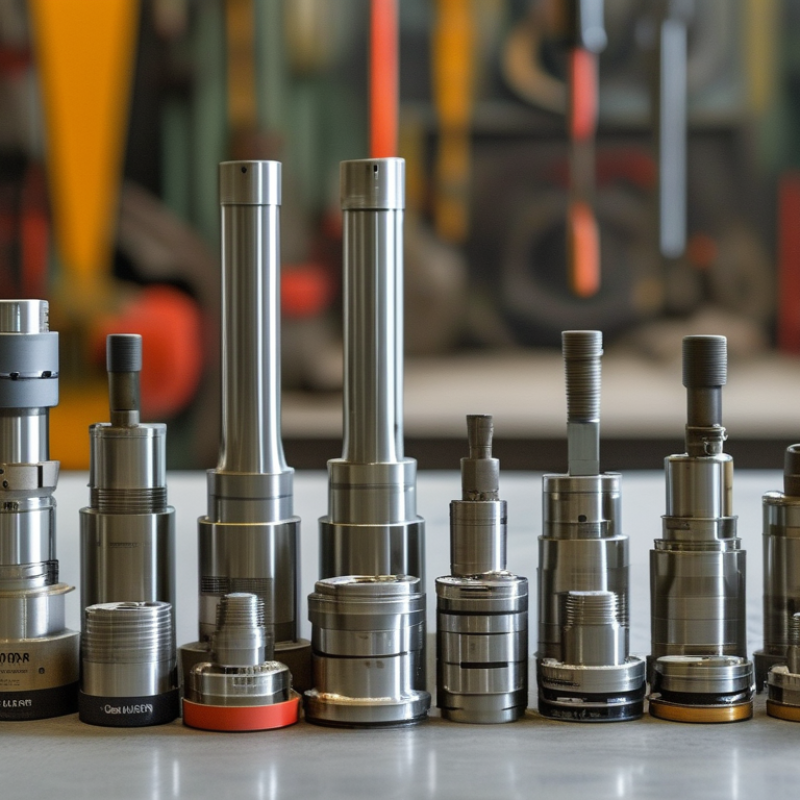
How to Find China Top Hydraulic Piston Manufacturers?

Define Your Hydraulic Piston Requirements and Application

Before searching for China’s top hydraulic piston manufacturers, define the working conditions precisely.

A piston specification is not only diameter and stroke. Record operating pressure, peak pressure, flow rate, cycle frequency, mounting style, rod load, and available installation space. Also describe the fluid, temperature range, contamination level, and expected service life.

According to Grand View Research’s 2024 hydraulic equipment analysis, the global market was valued at approximately USD 49 billion in 2023. This scale reflects strong demand, but it does not guarantee that every supplier understands your application.

A mobile excavator cylinder faces shock loads and outdoor contamination. A factory press needs repeatable positioning and stable performance across thousands of cycles. These differences affect bore size, rod diameter, seals, surface treatment, and testing requirements. Small details matter.

I have seen purchasing teams send only a drawing and a target price. That approach often creates expensive revisions. Ask manufacturers to calculate buckling risk, pressure loss, side loading, and fatigue exposure. Specify acceptance tests, including leakage, dimensional inspection, endurance cycling, and pressure testing.

ISO 4413 provides useful guidance for hydraulic system safety, while ISO 6020/2 supports dimensional consistency for certain hydraulic cylinders. Still, standards do not replace application data. Maybe your first load estimate is wrong. Recheck it with actual field measurements, including peak loads during starts, stops, and impacts.

Research China’s Leading Hydraulic Piston Manufacturers

Researching China’s leading hydraulic piston manufacturers requires more than reading export rankings. Start with the application: working pressure, stroke, bore size, fluid, temperature, and expected cycle life. A serious supplier should explain how its piston design matches these conditions. Ask for drawings, tolerance tables, material grades, heat-treatment records, and coating options. Clear technical answers matter more than polished photographs.

Demand evidence.

Shortlist manufacturers with documented experience in hydraulic cylinders or piston assemblies. Review factory addresses, equipment lists, inspection procedures, and recent project references. Request evidence of dimensional inspection, surface roughness testing, pressure testing, and batch traceability. Certifications can support credibility, but verify them against the actual production site.

A video call can expose useful details, including worn tooling, organized storage, calibrated gauges, or unexplained gaps. Small details often predict delivery reliability.

Order samples before discussing large volumes. Measure the piston diameter, rod finish, sealing fit, and concentricity with your own tools. Compare the inspection report with the physical part. I have learned that an attractive sample does not guarantee stable mass production. Ask how rejected parts are isolated, who approves design changes, and how complaints are handled.

Also confirm packaging, trade terms, lead times, spare-part support, and communication hours. The cheapest quotation may become expensive after delays or rework. Leave room for doubt; supplier research is a technical investigation, not a popularity contest.

Evaluate Manufacturing Quality, Technology, and Certifications

How to Find China’s Top Hydraulic Piston Manufacturers?

Manufacturing quality should be checked beyond polished factory floors. The Business Research Company valued the global hydraulic cylinder market at about USD 15.15 billion in 2024. That growth increases supplier choices, but also hides uneven process control.

Ask for material certificates, heat-treatment records, and dimensional inspection reports. Inspect piston rods for chrome uniformity, surface defects, and measurable roughness. Review cylinder bores after honing, not before assembly. A reliable factory should show pressure-test results, leakage limits, and serial-number traceability. Request sample data from several production batches. One perfect sample proves little.

Technology matters during difficult operating conditions. Check whether the manufacturer uses CNC machining, automated honing, calibrated torque tools, and documented cleanliness controls. ISO 4413 provides safety and system guidance for hydraulic fluid-power equipment. ISO 9001 certification is useful, but the ISO Survey 2022 recorded more than 1.2 million certificates worldwide. Certification alone cannot confirm piston accuracy. Visit the test area. Watch a pressure test.

Certifications need careful reading. Confirm the certificate scope, issuing body, expiry date, and covered production site. Environmental certification may support responsible operations, while product compliance depends on the application and market. I would still question impressive paperwork without recent audit findings. Ask how rejected parts are isolated and corrected. Small details reveal mature manufacturing. Sometimes, suppliers cannot explain them clearly. That matters.

Compare Product Specifications, Pricing, and Production Capacity

How to Find China Top Hydraulic Piston Manufacturers?

Finding reliable hydraulic piston manufacturers starts with comparable data, not attractive catalog promises. Ask each supplier for the same technical sheet. Record displacement, rated pressure, peak pressure, piston diameter, stroke, port size, seal material, and operating temperature. Keep every unit consistent. A 100 cc piston pump may look suitable, yet its continuous pressure could be too low for your equipment. Request drawings and performance curves. Small details matter.

Compare pricing against identical specifications and order quantities. Separate costs for machining, assembly, testing, packaging, tooling, and spare parts. Ask about minimum order quantities, sample fees, payment terms, warranty coverage, and delivery schedules. The lowest quote may exclude inspection or special sealing materials. That happened in one sourcing project I reviewed. The final cost rose after testing requirements appeared. A written quotation reduces this risk, though it cannot remove every surprise.

Production capacity also needs evidence. Ask how many similar piston units the factory produces monthly, rather than counting all employees. Check machining equipment, assembly lines, pressure-test benches, inspection tools, and shift arrangements. Request recent quality records and traceability examples. A video audit can help, but an on-site visit gives stronger evidence. No comparison is perfect. I would score technical fit, landed price, capacity, defect handling, and communication separately. A supplier with fewer machines may still perform better if its process is controlled. Compare facts, then question the gaps.

How to Find China Top Hydraulic Piston Manufacturers? – Compare Product Specifications, Pricing, and Production Capacity
Anonymous Supplier Profile Typical Product Range Nominal Displacement Rated Pressure Peak Pressure Rotational Speed Common Materials Indicative Unit Price Standard Lead Time Monthly Production Capacity Minimum Order Quantity Quality and Compliance Indicators Best-Fit Application
Profile A
High-volume OEM manufacturer
Axial piston pumps and motors for mobile machinery 45–250 cm³/rev 250–350 bar 350–420 bar 1,800–3,000 rpm Alloy steel shaft; ductile iron or cast-iron housing; hardened steel valve plate US$420–1,850 per unit 25–45 days for standard models 1,500–3,000 units 10–30 units ISO 9001 quality system; CNC machining; pressure, leakage, noise, and endurance testing Excavators, wheel loaders, agricultural equipment, and construction machinery
Profile B
Custom engineering specialist
Customized axial piston pumps, motors, and replacement assemblies 28–180 cm³/rev 280–400 bar 400–450 bar 1,500–3,600 rpm Forged alloy steel; coated aluminum or cast-iron housing; bronze or composite bearing surfaces US$680–2,600 per unit 35–60 days for customized orders 400–900 units 5–20 units Documented engineering change control; material certificates; prototype inspection; performance test reports Special-purpose machinery, industrial hydraulics, and low-volume OEM projects
Profile C
Cost-focused export manufacturer
Standard open-circuit piston pumps and compact piston motors 20–100 cm³/rev 210–315 bar 315–350 bar 1,800–2,500 rpm Cast iron housing; alloy steel rotating group; hardened cylinder block US$180–760 per unit 20–35 days for stocked configurations 800–1,800 units 10–50 units Incoming material inspection; dimensional inspection; factory pressure testing; export packaging controls Replacement parts, agricultural machinery, and general industrial equipment
Profile D
Industrial high-pressure manufacturer
Variable-displacement pumps and closed-circuit hydrostatic units 55–280 cm³/rev 315–420 bar 420–500 bar 1,800–3,500 rpm High-strength ductile iron; nitrided steel components; bronze thrust plates US$900–3,400 per unit 40–70 days 300–750 units 5–15 units Load-cycle testing; cleanliness control; traceable inspection records; calibrated test benches Mining equipment, heavy construction machinery, and hydrostatic drives
Profile E
Compact hydraulic unit producer
Miniature axial piston pumps and compact hydraulic power units 5–45 cm³/rev 160–280 bar 250–315 bar 2,000–4,000 rpm Aluminum or compact cast-iron housing; stainless or alloy steel shaft; hardened pistons US$120–620 per unit 15–30 days 1,000–2,500 units 20–100 units Dimensional control; flow and pressure verification; oil cleanliness inspection; batch traceability Material handling, compact tractors, lifting systems, and auxiliary hydraulic circuits
Profile F
Aftermarket replacement specialist
Replacement piston pumps, motors, cartridge assemblies, and repair kits 15–160 cm³/rev 210–350 bar 315–400 bar 1,500–3,000 rpm Steel rotating group; cast-iron housing; bronze retainers; elastomer sealing kits US$260–1,450 per unit 10–25 days for common models 600–1,500 units 5–20 units Interchangeability checks; dimensional reports; bench testing; spare-parts availability Maintenance distributors, equipment repair, and fleet replacement programs
Procurement note: The figures above represent practical China-market benchmark ranges for hydraulic piston products. Actual specifications, prices, lead times, and capacity should be confirmed through technical drawings, test reports, production audits, and a written quotation before purchasing.

Verify Suppliers Through Samples, Audits, and Customer References

Finding China’s top hydraulic piston manufacturers requires evidence, not attractive websites or search rankings. Begin by requesting production samples made with the same materials and processes used for regular orders. Examine dimensions, surface finish, coating uniformity, seal grooves, and thread accuracy. A piston should also undergo pressure, leakage, and temperature testing that reflects your working conditions. A sample can lie. One excellent piece cannot prove stable production, so request several samples from different batches.

A supplier audit should examine the factory, not only its showroom. Check machining equipment, heat-treatment controls, inspection stations, and material traceability. Ask to review calibration records, process instructions, and reports for rejected parts. Observe how workers handle measurements and protect finished pistons from dust and impact. Audits are snapshots. They may miss seasonal staffing changes or rushed production, so ask how quality is maintained during peak orders.

Customer references provide practical evidence. Request recent customers with similar pressure ratings, piston sizes, and delivery expectations. Ask whether dimensions remained consistent, how the supplier handled complaints, and whether corrective actions were completed on time. Contact references independently when possible. A trustworthy manufacturer should discuss weaknesses without evasive answers. No factory is perfect. The important question is whether problems are detected early, documented clearly, and corrected with measurable results. Poor communication during evaluation often becomes worse after payment.

How to Find China’s Top Hydraulic Piston Manufacturers

Verify suppliers through samples, audits, and customer references

This practical verification framework groups the key evidence to collect before selecting a hydraulic piston manufacturer. Sample approval focuses on dimensional accuracy, material, surface finish, sealing performance, and pressure testing. Factory audits examine quality systems, production capacity, traceability, equipment, inspection records, and delivery controls. Customer references help confirm product consistency, technical support, delivery reliability, and after-sales performance.