A Uav Camera Module is the drone’s visual sensing unit. It combines a lens, image sensor, processor, and protective housing. Together, these parts turn reflected light into usable photographs or video. The module may look small, yet its design affects flight safety, mapping accuracy, and inspection quality. A clear image begins with more than megapixels.
Light enters through the lens and reaches the sensor, often a CMOS chip. Each pixel measures light intensity and color. The onboard image signal processor then reduces noise, balances exposure, and creates a viewable frame. A gimbal can steady the camera while motors correct vibration and movement. Some compact systems use electronic stabilization instead. The difference becomes visible when a drone hovers beside a windy building.
The camera sends processed data to the flight computer, storage system, or remote controller. Transmission speed, compression, and heat management influence the final result. A high-resolution module may still produce weak footage under glare, haze, or poor focus. Real-world testing matters. Specifications alone can mislead.
Choosing a Uav Camera Module requires matching the sensor to the task. A wide lens can cover more ground, while a narrow lens reveals distant details. Mapping work needs consistent geometry and stable exposure. Inspection work may need sharp edges and controlled focus. Weather resistance, weight, power demand, and maintenance also deserve attention. Small compromises remain unavoidable. Understanding how each component works helps operators judge performance honestly and select equipment with greater confidence.
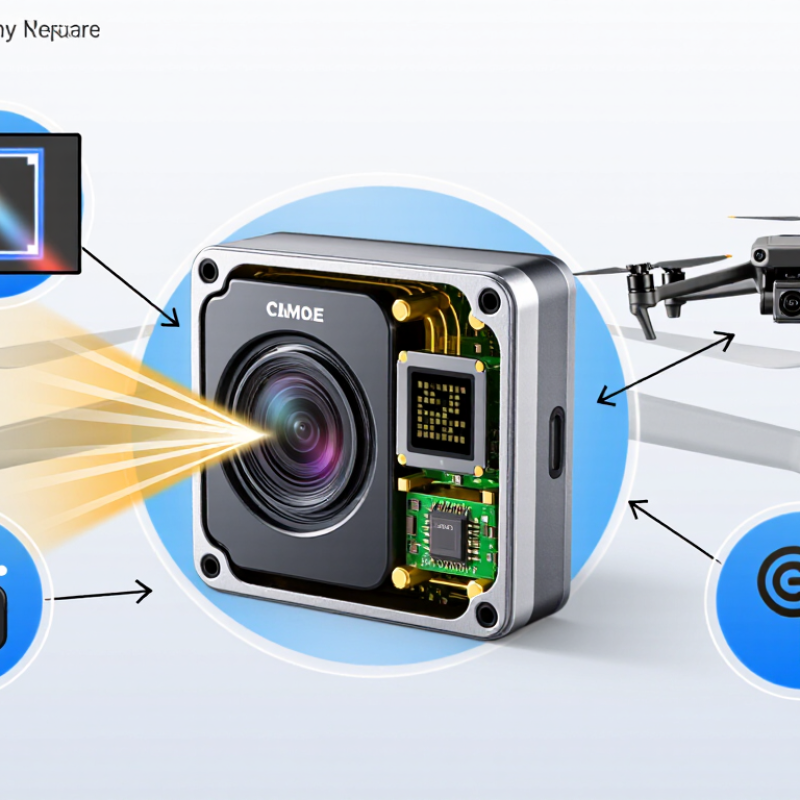
A UAV camera module is the imaging unit mounted on an unmanned aerial vehicle. It captures light, converts it into digital data, and sends images to the flight computer or operator. Drone Industry Insights’ Drone Market Report 2024 forecasts the global drone market at about USD 54.6 billion in 2024. This growth increases demand for smaller, sharper, and more reliable camera modules.
A complete module includes a lens, image sensor, processor, memory, power circuit, and communication interface. The lens controls field of view and light intake. The sensor determines resolution, dynamic range, and low-light performance. The processor reduces noise, corrects color, and compresses video. A stabilizing mount limits blur during vibration or sudden movement. Some modules also include thermal sensors, depth sensors, or multispectral filters. The MarketsandMarkets 2024 drone camera analysis reports strong double-digit growth expectations through the decade. However, specifications can mislead. A higher pixel count does not guarantee clearer images in haze or motion.
Tips: Match the sensor to the mission. Test footage at dawn, noon, and dusk. Check heat, vibration, storage speed, and lens distortion. A small detail matters. Keep the module balanced. Field testing often reveals weaknesses that laboratory charts miss. My own practical view is cautious: optical quality, stabilization, and data handling usually matter more than headline resolution.
A UAV camera module combines a lens, image sensor, processor, and stabilizing system. Its job is simple: capture light, convert it into data, and preserve useful details during flight. A CMOS sensor measures light at each pixel. The processor then adjusts exposure, color, noise, and sharpness. In moving air, electronic or mechanical stabilization reduces vibration and rolling-shutter distortion.
The 2024 Drone Market Report by Drone Industry Insights places the global commercial drone market at approximately US$30 billion, increasing demand for dependable imaging systems.
During capture, the lens focuses reflected light onto the sensor. Shutter speed controls motion blur, while gain raises brightness but can add grain. The processor may combine several frames, correct lens distortion, and compress footage before transmission. Some modules also analyze edges, heat patterns, or surface changes at the flight location. Latency matters. A delayed preview can make a pilot react too late near trees, roofs, or power lines.
Grand View Research reported a UAV market value of US$29.86 billion in 2022 and projected a 13.9% compound annual growth rate through 2030.
That growth does not guarantee better images. A higher resolution can increase storage, heat, and processing delay. A common engineering assumption fails here: more pixels are not always more useful.
In low light, a larger sensor may produce clearer evidence than a denser one. Field testing should compare detail, stability, temperature, and transmission delay, not resolution alone.
What Is a UAV Camera Module and How Does It Work?
A UAV camera module is a compact imaging system mounted on an unmanned aerial vehicle. It captures light, processes visual data, and sends images to the flight controller or ground station. The image sensor is its core component. It converts incoming light into electrical signals. Larger sensors usually perform better in dim conditions. However, they can increase weight and power consumption.
The lens controls the field of view, focus, and light entering the sensor. A wide lens covers more ground but may create edge distortion. A narrow lens shows distant details with less coverage. An image signal processor then adjusts exposure, color, sharpness, and noise. These settings must respond quickly when the UAV moves from sunlight into shadow. Not always perfectly.
Mechanical or electronic stabilization reduces vibration from motors and wind. A three-axis gimbal can keep the horizon steady during sharp turns. Electronic stabilization crops the image and calculates movement between frames. It saves space, but it can reduce the final viewing area. The module also depends on data compression and wireless transmission. Low-latency processing helps operators react to changing terrain. Heat remains a practical concern. Continuous recording can warm the sensor and processor, causing noise or reduced performance. In field testing, even a clean lens may produce poor footage when condensation appears. That small detail is easy to overlook. Reliable modules need careful calibration, sealed construction, stable power, and regular inspection.
| Technology or Component | Primary Role in the Module | Typical Technical Data | How It Works in a UAV Camera System |
|---|---|---|---|
| Image Sensor | Converts light into an electronic image signal. | CMOS; approximately 12–50 megapixels; pixel size commonly 0.8–3.45 µm. | Photodiodes capture incoming photons, while the sensor’s readout circuitry converts the resulting charge into digital pixel values for image processing. |
| Lens Assembly | Focuses light onto the image sensor and defines the viewing area. | Fixed or adjustable focus; approximately 70°–90° diagonal field of view for many wide-angle aerial systems. | Multiple optical elements reduce distortion and focus the scene. Focal length and sensor size determine the field of view and ground coverage. |
| Mechanical Gimbal | Stabilizes the camera and controls its pointing direction. | Usually 2-axis or 3-axis stabilization; brushless motors; angular stabilization commonly within a fraction of one degree. | Motorized axes counteract aircraft roll, pitch, and yaw. Position sensors and a control loop continuously adjust motor torque to keep the camera aimed steadily. |
| Electronic Image Stabilization | Reduces residual vibration and motion blur through digital processing. | Uses gyroscope data and image cropping; may reduce the effective field of view slightly. | The processor estimates camera movement and shifts successive frames or crops the image to compensate for small vibrations that remain after mechanical stabilization. |
| Image Signal Processor | Transforms raw sensor data into usable photographs or video. | Supports demosaicing, noise reduction, sharpening, exposure control, and color processing. | Raw pixel data is corrected and enhanced in real time. The processor balances image quality, processing speed, power consumption, and storage requirements. |
| Exposure Control | Controls image brightness and motion rendering. | Uses shutter speed, aperture, and sensor gain; many modules support manual and automatic modes. | The camera measures scene brightness and adjusts one or more exposure parameters. Faster shutter speeds help reduce motion blur during flight. |
| High Dynamic Range Processing | Preserves detail in bright skies and darker ground areas. | May combine multiple exposures or apply sensor-level digital processing. | The system captures or processes brightness information across a wider range, then merges or maps the data to produce a balanced image. |
| Onboard Video Encoder | Compresses video for storage and wireless transmission. | Common formats include H.264 or H.265; typical aerial video modes range from Full HD to 4K. | The encoder removes spatial and temporal redundancy to reduce data size while retaining visual detail, lowering the bandwidth needed for live viewing. |
| Wireless Data Link | Transfers live video, photographs, and control information. | Digital radio link; performance depends on frequency, antenna design, bandwidth, interference, and regulatory limits. | Compressed image data is packetized and transmitted to a ground controller or receiving station. Feedback channels carry commands such as camera angle and capture mode. |
| Inertial Measurement Unit | Measures angular motion and acceleration for stabilization and metadata. | Typically combines a 3-axis gyroscope and 3-axis accelerometer; some systems also use a magnetometer. | Motion measurements are fused by the flight or gimbal controller to estimate orientation, compensate for movement, and synchronize camera data with aircraft attitude. |
| Geotagging and Position Data | Associates images with location, altitude, and orientation information. | May include latitude, longitude, altitude, timestamp, camera angle, and aircraft attitude. | The camera system receives navigation data from the UAV and stores selected values in image metadata or a separate mission record for mapping and inspection workflows. |
| Thermal Imaging Sensor | Detects infrared radiation for heat-related inspection and monitoring. | Long-wave infrared operation is commonly around 8–14 µm; resolution is often lower than visible-light cameras. | Microbolometers measure changes caused by infrared radiation and convert them into temperature-related image values, subject to emissivity and environmental conditions. |
| Multispectral Filters | Separates selected wavelength bands for agricultural and environmental analysis. | May include visible red, green, blue, and near-infrared bands, depending on the sensor configuration. | Optical filters or dedicated sensor channels isolate specific wavelength ranges. The resulting bands can be compared to assess vegetation vigor and surface characteristics. |
| Storage and Data Interface | Stores captured media and connects the camera to the UAV electronics. | Removable flash storage or embedded memory; digital interfaces may include high-speed serial links. | Still images and encoded video are written to local storage, while control commands, synchronization signals, and status information travel through the camera interface. |
| Power Management | Delivers stable electrical power to sensors, processors, motors, and communication circuits. | UAV systems commonly use lithium-based battery packs with regulated internal voltage rails. | Power converters regulate the aircraft battery supply and isolate sensitive imaging electronics from electrical noise generated by motors and other onboard systems. |
| Thermal Management | Keeps the sensor and processor within their operating temperature range. | Uses heat spreaders, conductive frames, ventilation, or passive airflow depending on module size and workload. | Heat generated during image processing and video encoding is transferred away from critical components to reduce noise, performance loss, and thermal shutdown risk. |
A UAV camera module is more than a small lens. It combines an image sensor, optics, processor, and stabilizing hardware. During flight, it captures ground features, obstacles, landing areas, and route changes. The flight controller then uses this visual information with positioning and motion sensors. This combination helps the aircraft maintain its path, estimate movement, and respond to changing surroundings.
For navigation, clear images matter. A downward-facing camera can detect landing markers or uneven terrain. A forward-facing camera can support obstacle awareness and route inspection. Mapping missions require consistent exposure, sharp details, and accurate time records. Poor lighting can reduce reliability quickly. A camera cannot replace every sensor. It may struggle with glare, fog, dust, or repetitive surfaces. That limitation deserves attention during mission planning.
Tips: Match the camera to the mission, not just the resolution. Check image latency before relying on visual navigation. Calibrate the lens and stabilizer regularly. Record sample footage at different heights and speeds. Review failed frames, too. They often reveal hidden weaknesses, such as motion blur or delayed processing. Weather changes can also affect results more than expected. A careful operator keeps backup positioning data and sets conservative flight limits. Errors still happen. Planning should assume that one sensor may become unreliable.
What Is a UAV Camera Module and How Does It Work?
A UAV camera module combines a lens, image sensor, processor, stabilizer, and data link. Its performance depends on more than megapixels. MarketsandMarkets estimated the global UAV market at USD 30.6 billion in 2023, rising to USD 58.4 billion by 2028. This expansion increases demand for dependable imaging, especially in inspection, mapping, and emergency assessment.
Look at sensor size first. A larger sensor usually captures cleaner shadows and less noise at dusk. Dynamic range matters when a dark roof meets bright sky. The EMVA 1288 standard recommends measuring sensitivity, noise, and dynamic range under controlled conditions. Ask for measured values, not promotional claims. A 4K module can still produce weak images with poor optics or compression.
Stabilization is equally practical. A three-axis gimbal can keep bridge bolts sharp during vibration, while electronic stabilization may crop the frame. Check shutter speed, rolling-shutter distortion, autofocus response, and image latency. Less than 100 milliseconds can feel responsive for inspection work, but actual results depend on the transmission system. Thermal cameras require separate attention: resolution, temperature accuracy, calibration drift, and emissivity settings affect interpretation. Weight and power draw also matter. A heavier module reduces flight endurance. Field testing is essential. I have seen impressive daytime footage fail in low light. Specs rarely reveal that weakness.
Representative performance specifications for common UAV camera module classes. Resolution, video frame rate, and dynamic range are key factors when evaluating image quality, motion capture, and exposure performance.
Lightweight visual modules typically prioritize low mass and adequate resolution, mapping modules emphasize higher pixel counts, and professional imaging modules generally provide higher dynamic range for challenging light conditions. The values shown are representative specification values for these module classes rather than measurements from a specific manufacturer.
